Dr. Kelli Morgan
Where the Waters Made Us positions Saffell Gardner’s Cosmic Crossings series within scholarly conceptions of the Black Atlantic—an oceanic archive where identity is forged not through static origin, but through movement, rupture, and recomposition. In these works, the Middle Passage is rendered not as a singular historical event, but as an enduring psychic and cosmological condition: the liminal space where various African cultures were violently disassembled and, paradoxically, where Blackness was re-formed.
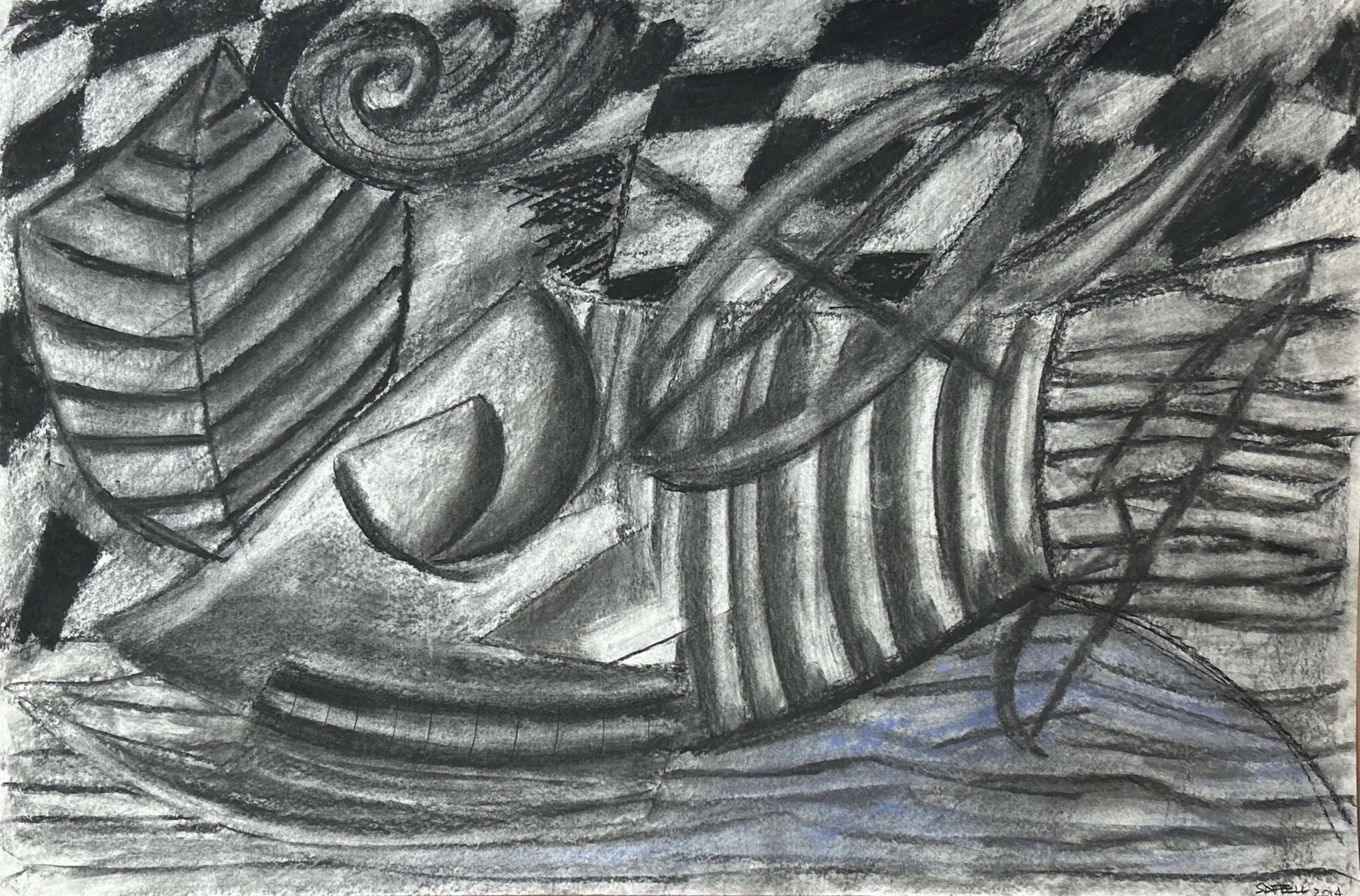
Gardner’s compositions are dense with sail motifs, Shango symbology, flowing water, geometric fragmentation, and vegetal forms that evoke the ship not merely as vessel, but as threshold. The repeated sail structures reference both forced migration and spiritual propulsion. Water becomes both grave and womb—an abyss that swallows and a medium that births. Shango iconography and swirling circular forms signal the survival and transformation of Yoruba cosmologies across the Atlantic world. Checkerboard grounds and fractured geometries suggest instability, navigation, and contested terrain—echoing the insistence that Black identity emerges through routes rather than roots. For Gardner, Blackness is a process—an alchemical becoming shaped by water, wind, ritual, and survival that is ongoing.Â
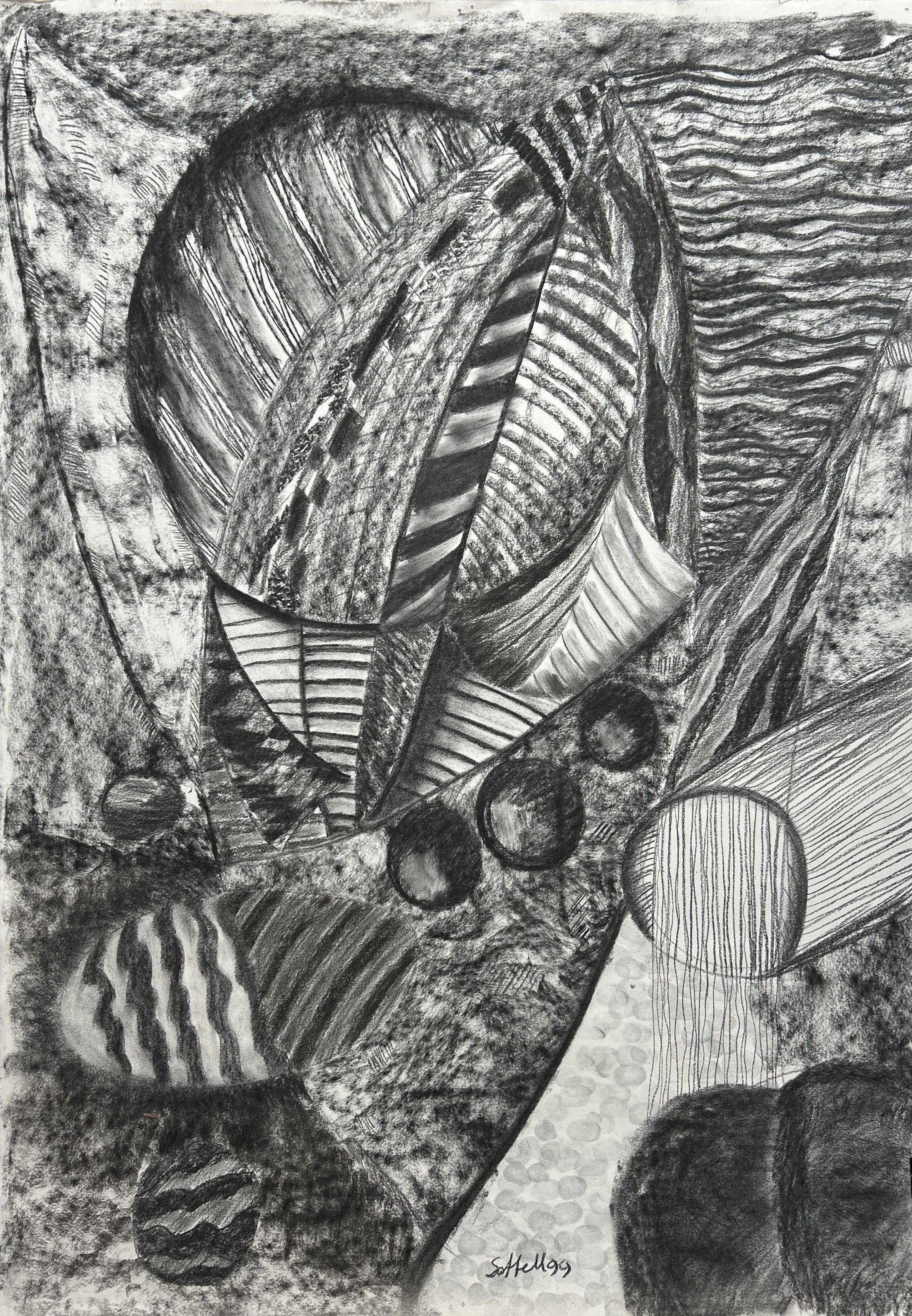
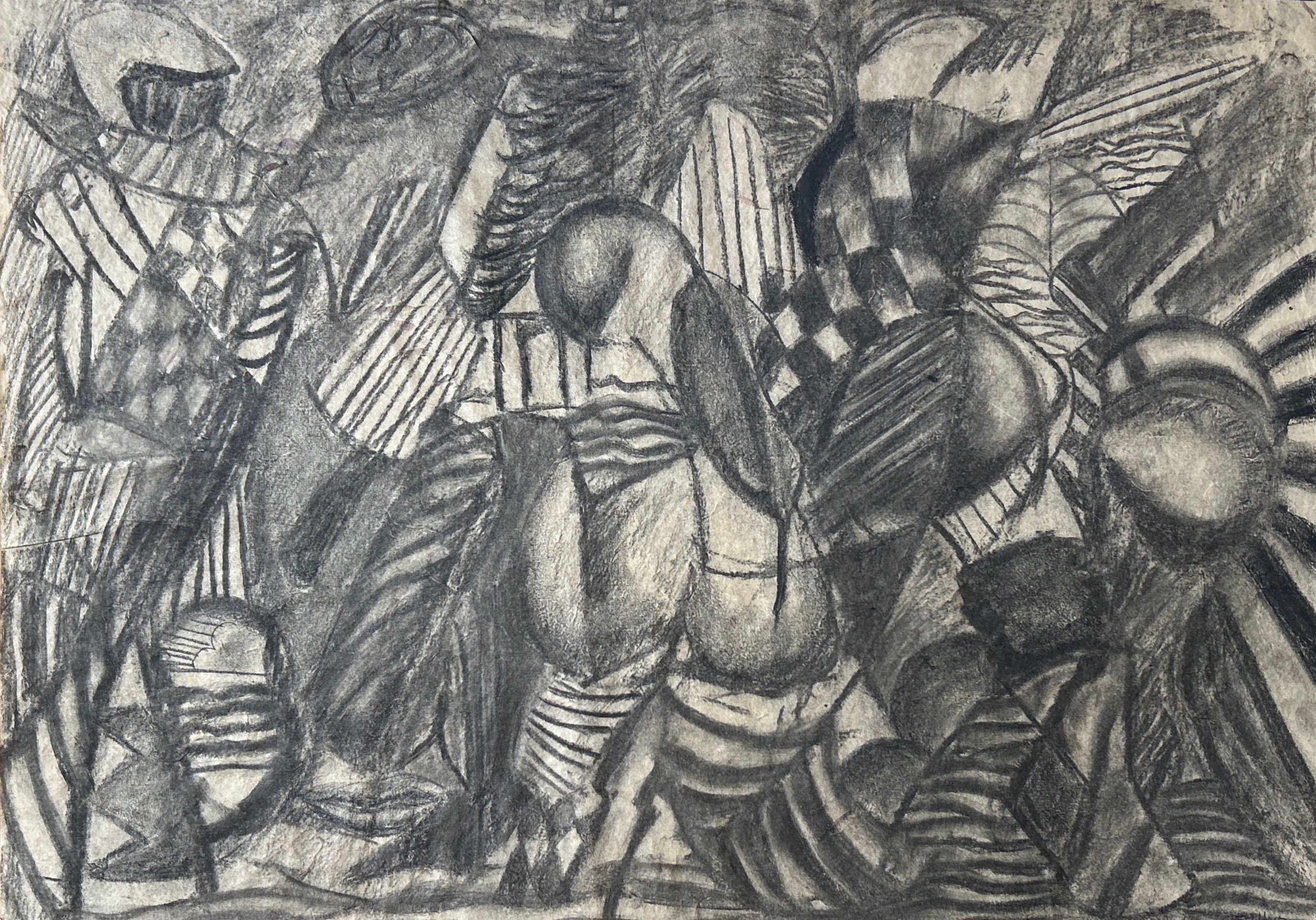
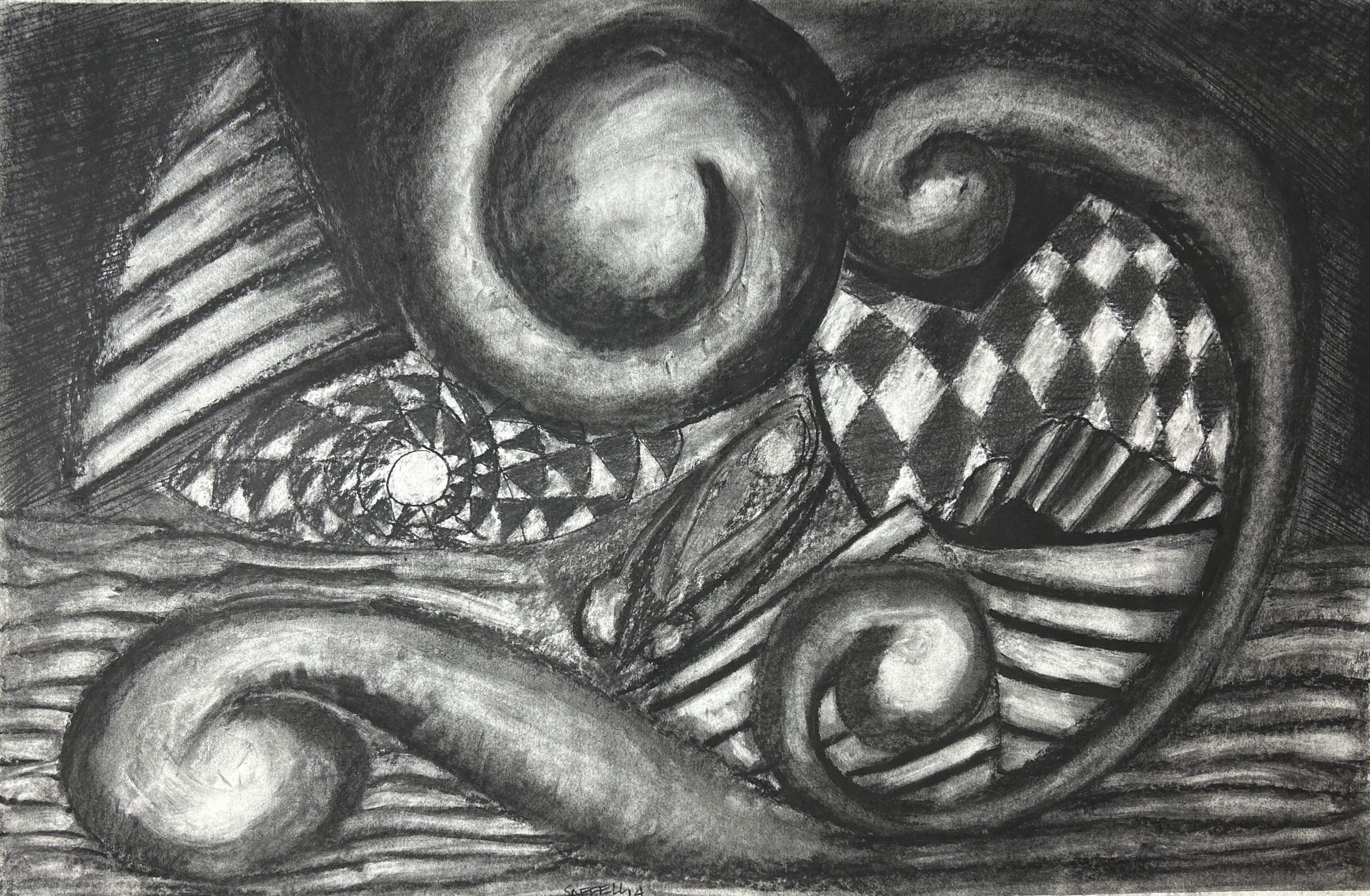
In the Beginning, Saffell Gardner returns us to a sacred African cosmology in which Blackness is already elemental, alchemical, and in communion with the universe. These charcoal forms—sails, currents, seeds, vessels, and celestial bodies—do not signal fragmentation alone, but ancestral knowledge: a world where water, wind, earth, and spirit moved together as one. Before colonization, African life was shaped by profound understandings of nature’s power and humanity’s place within it. Gardner’s layered abstractions evoke that primordial intimacy, suggesting Black being as already cosmological—formed through rhythm, ritual, and relation—before the violences of the Atlantic sought to sever what these works remember.
In this opening work, Gardner evokes an African cosmology in which Blackness is elemental, alchemical, and inseparable from divine creation. Layered orbs, currents, and patterned forms suggest a universe alive with sacred relation, where humanity, spirit, and nature move together as one—bound to God through rhythm, matter, and transformation.
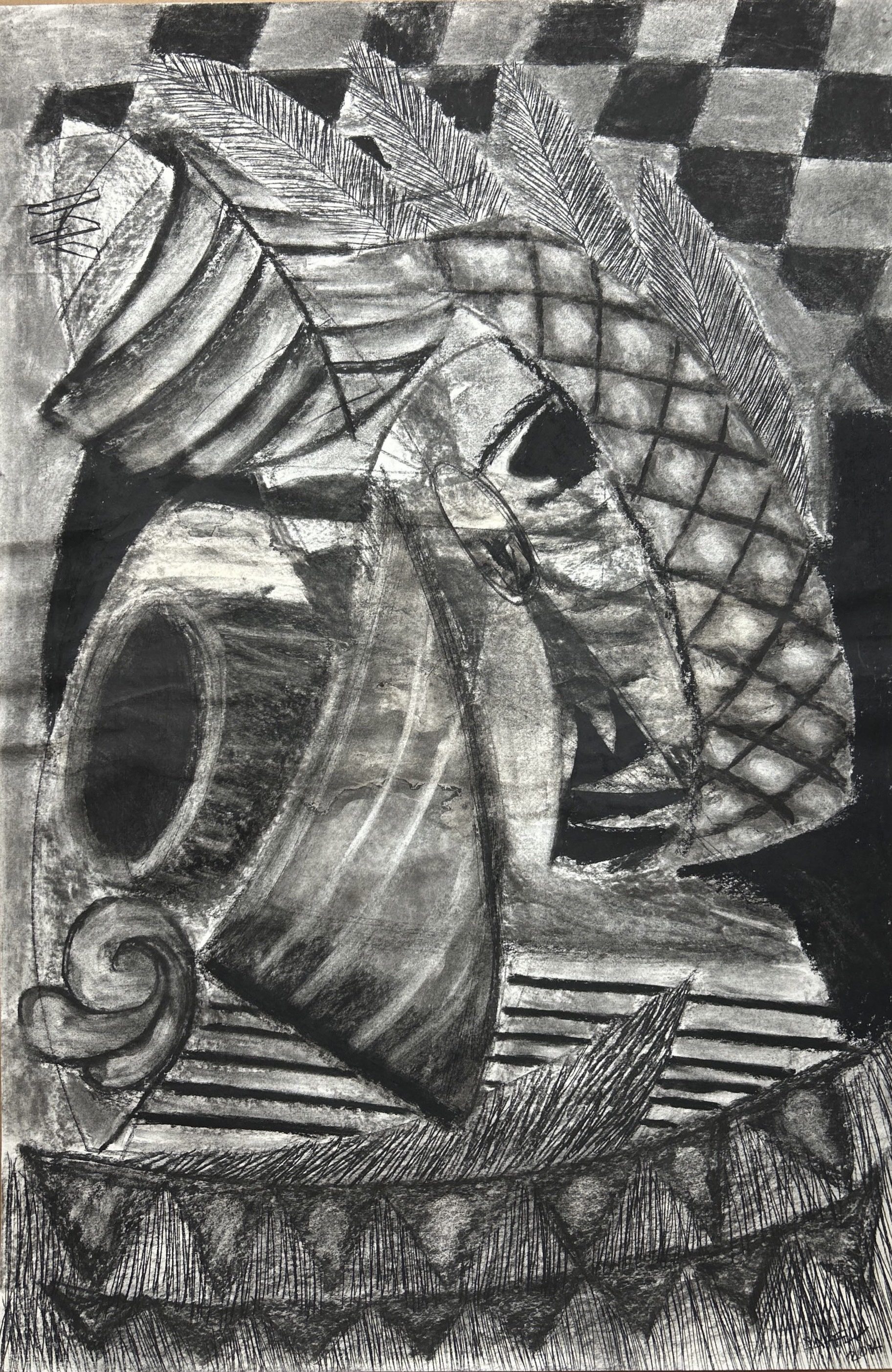
Here, mask and feather imagery call forth the diversity, complexity, and sacred authority of African cultures prior to colonial rupture. Gardner reminds us that African societies were never singular or static, but rich with distinct spiritual systems, artistic languages, and ceremonial forms that carried memory, status, power, and ancestral presence.
Â
This composition foregrounds African life as deeply attuned to the natural world. Interwoven vegetal, patterned, and bodily forms suggest a worldview grounded in coexistence rather than domination, where land, water, spirit, and human life remain mutually sustaining forces. Gardner renders nature not as backdrop, but as kin, teacher, and origin.
Â
Â
Â
For acquisition inquiries, please contact info@blackartistsarchive.org.
Where the Waters Made Us gathers Gardner’s fractured sails, currents, vessels, and spiral forms into a visual language of passage and remaking. In Paul Gilroy’s sense, the Black Atlantic is not simply a route of suffering but a space in which Blackness is continuously made and remade through rupture, transport, and survival. Gardner renders the ship as portal: the Door of No Return, the hold, the horizon, and the soul passage all at once. These forms evoke being carried as cargo, yet they also suggest another crossing—what Drexciya imagines as an aquatic afterlife, a soul portal through which new Black worlds become possible. Here, water is not only grave but medium, threshold, and laboratory. In these works, Blackness continues to emerge as alchemy: transformed by inconceivable violence, yet reconstituted into new psychic, spiritual, and cosmological being.
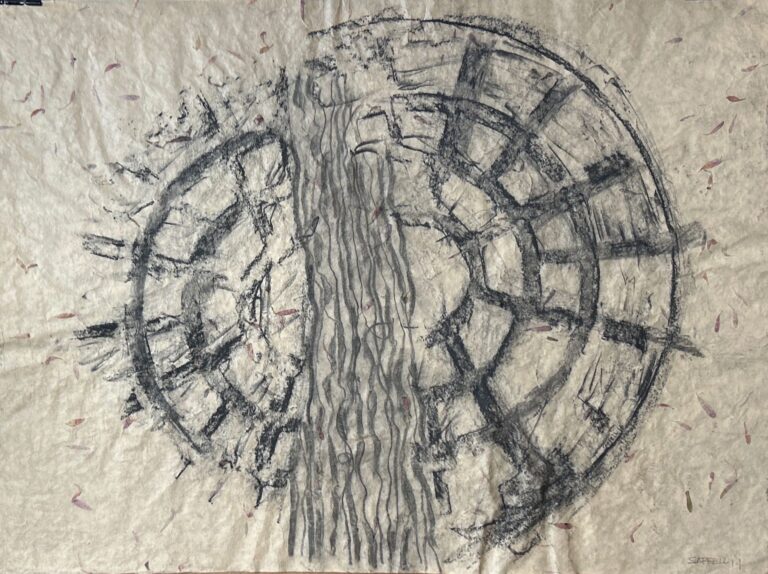
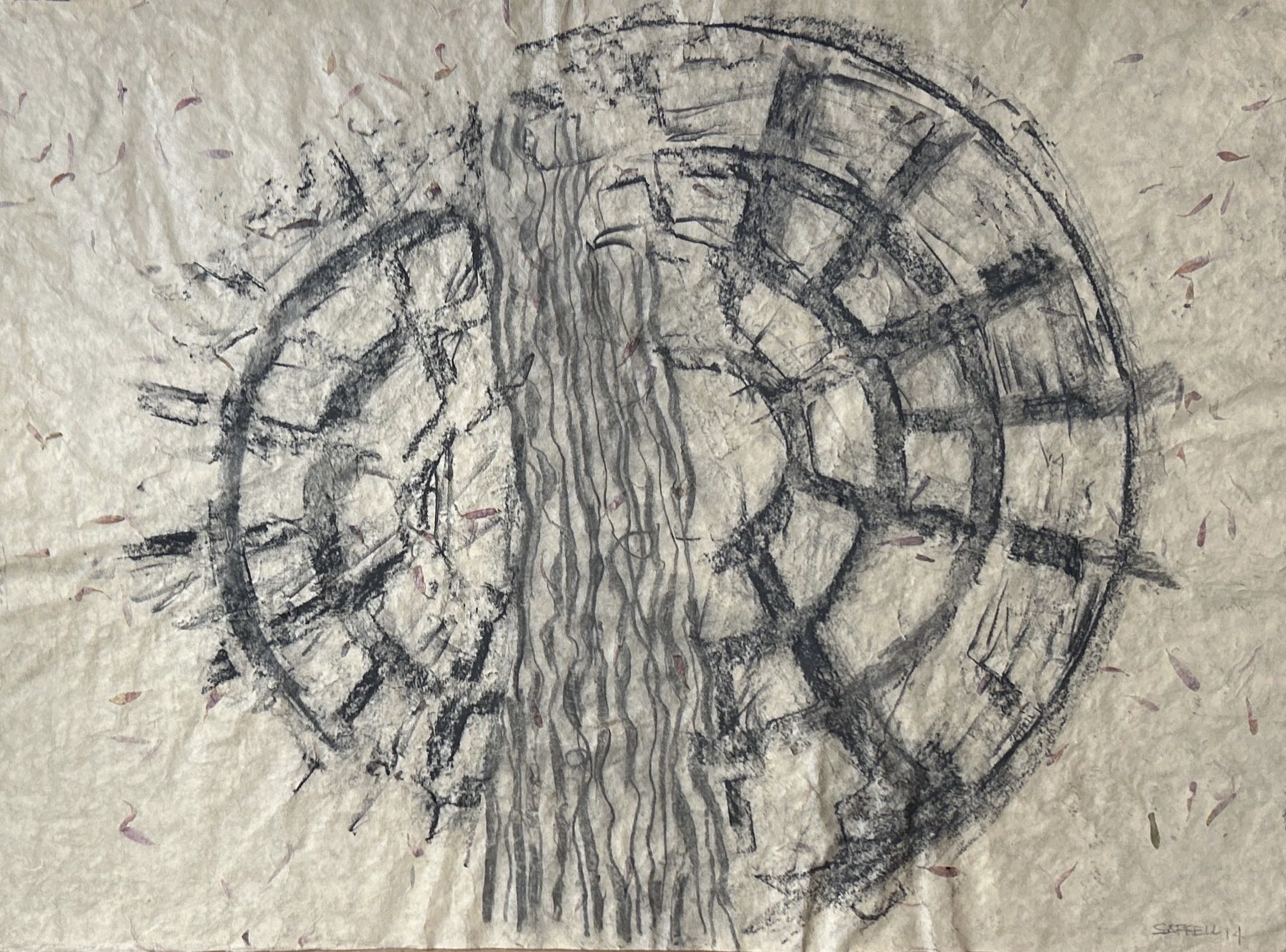
Drawing from his use of found objects, Gardner transforms the manhole cover into a kind of fractured compass, a navigational form split by water and history. This work evokes the Middle Passage as both rupture and portal. Circular, ship-like forms split open around a watery vertical axis, suggesting transport through the Door of No Return and into another state of being. Gardner renders Blackness here not as fixed identity, but as something broken, carried, and remade.
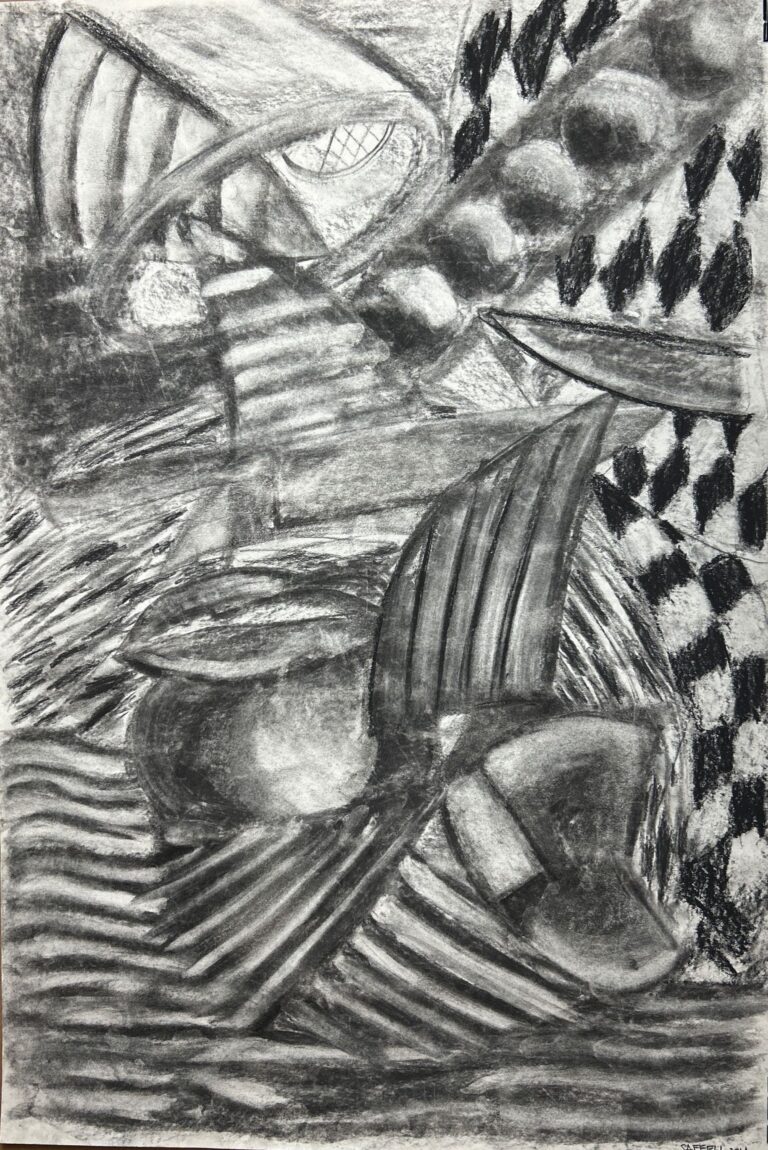
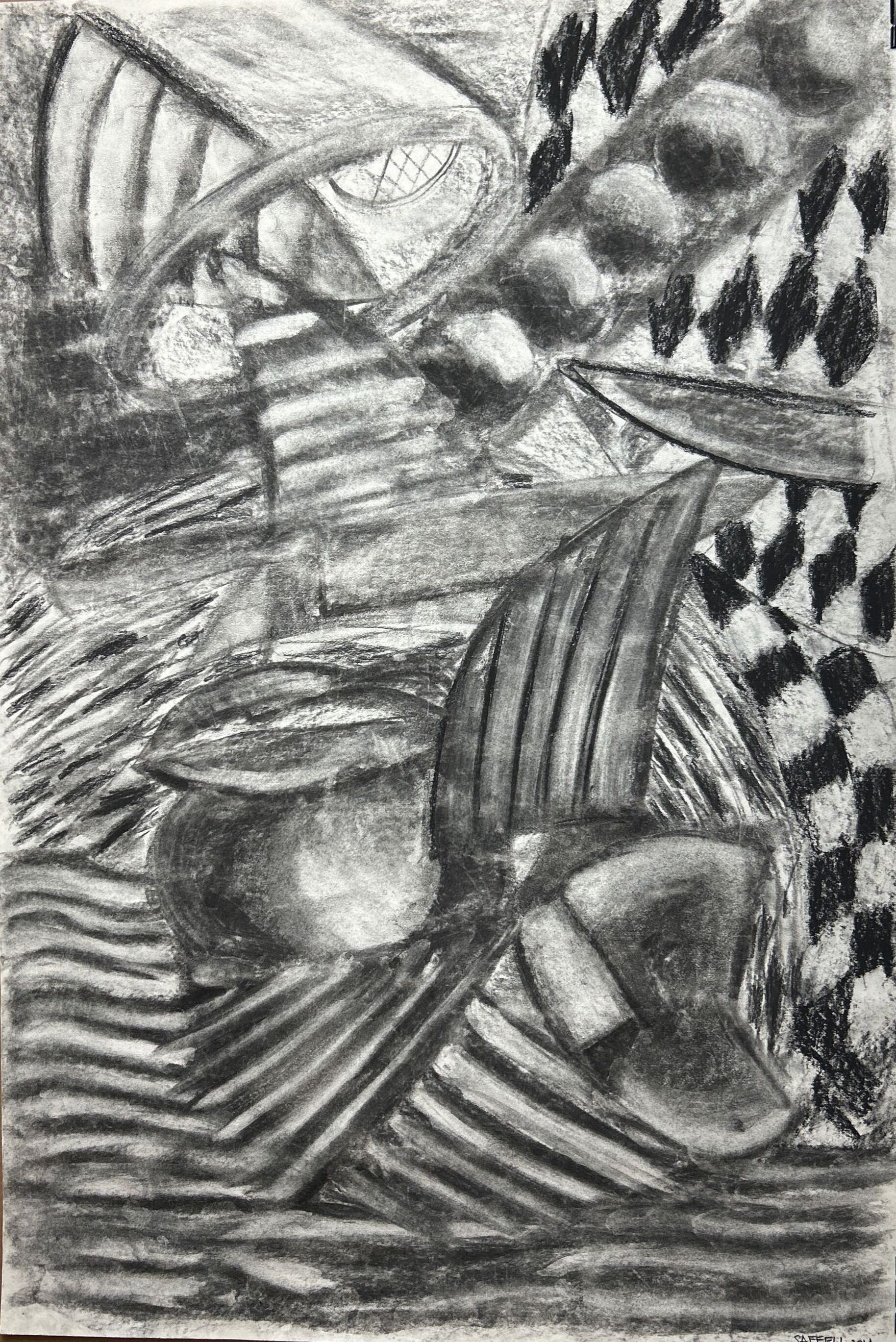
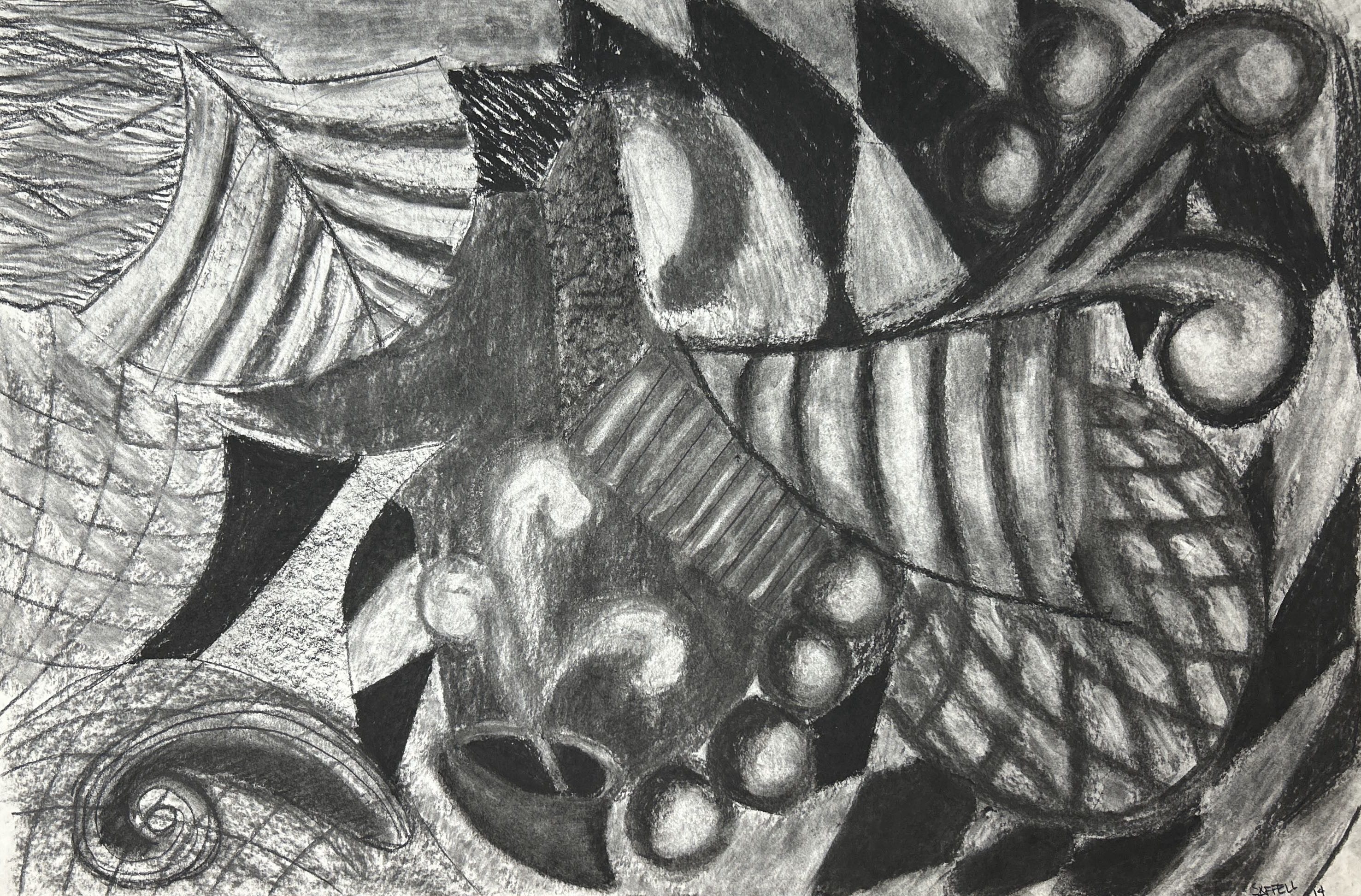
Gardner layers vessel and patterned field to evoke the psychic density and profound chaos of oceanic passage. Repeating circular forms recall moon cycles and tidal rhythms, while the opening in the upper left suggests a portal spilling directly into the ship’s hold. The composition registers the disorder of forced transport—memory, spirit, and body compressed into violent motion. Rather than narrating the Middle Passage literally, Gardner renders its atmospheric force, conveying how such chaos must have disoriented and transformed millions of African people.Â
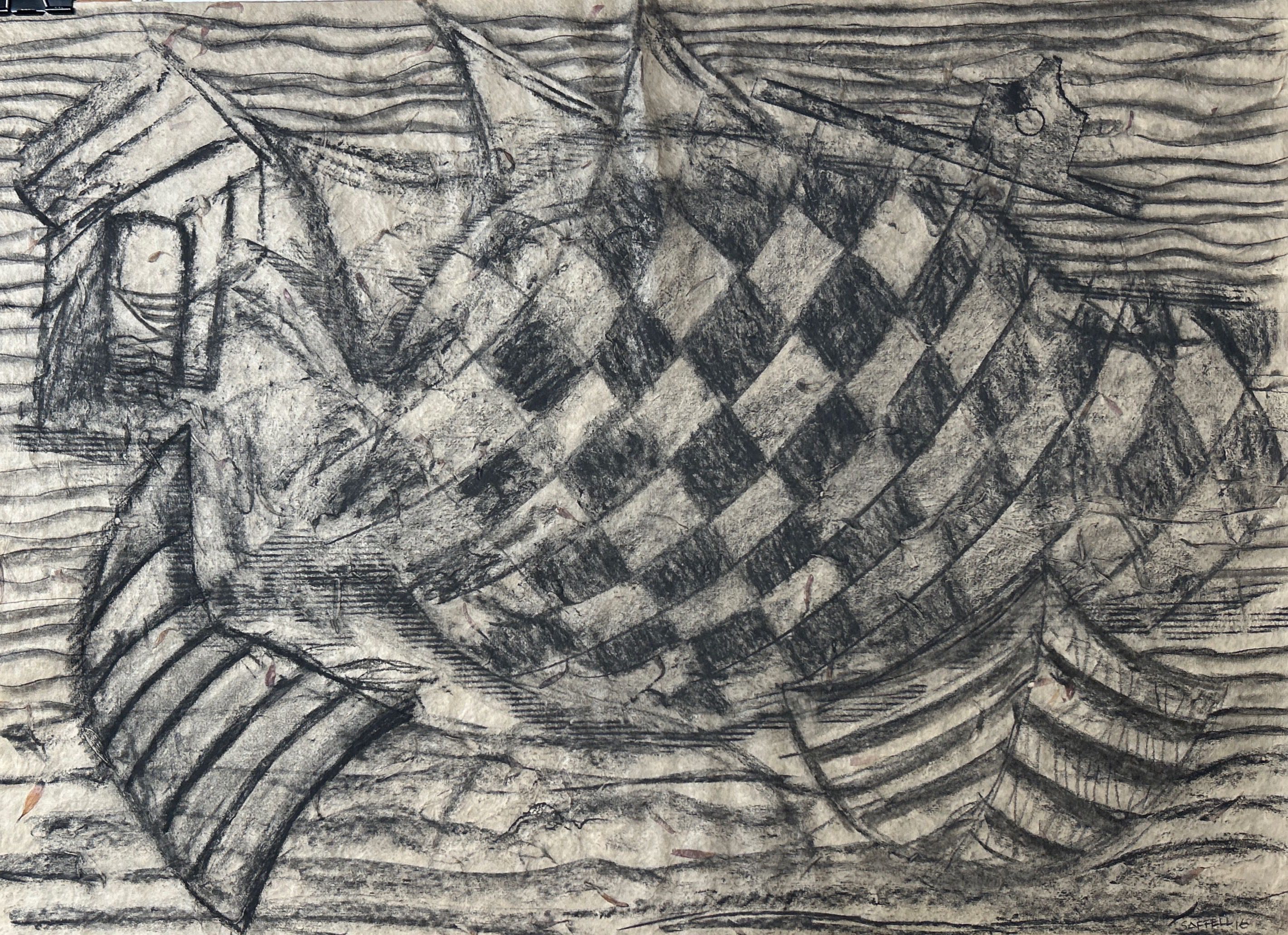
Sails, checkerboard patterning, and surging water converge in a composition of instability and motion. Gardner visualizes the Black Atlantic as a site of violent transport, but also of transformation, where the ship’s hold becomes an unlikely chamber of recomposition.
In this piece, curved forms drift across a watery ground like fragments in migration. Gardner suggests an oceanic cosmology in which bodies, vessels, and symbols move through a soul portal of loss and becoming. The work resonates with Drexciya’s aquatopia, where Black life survives submersion by transforming into something newly imaginable.
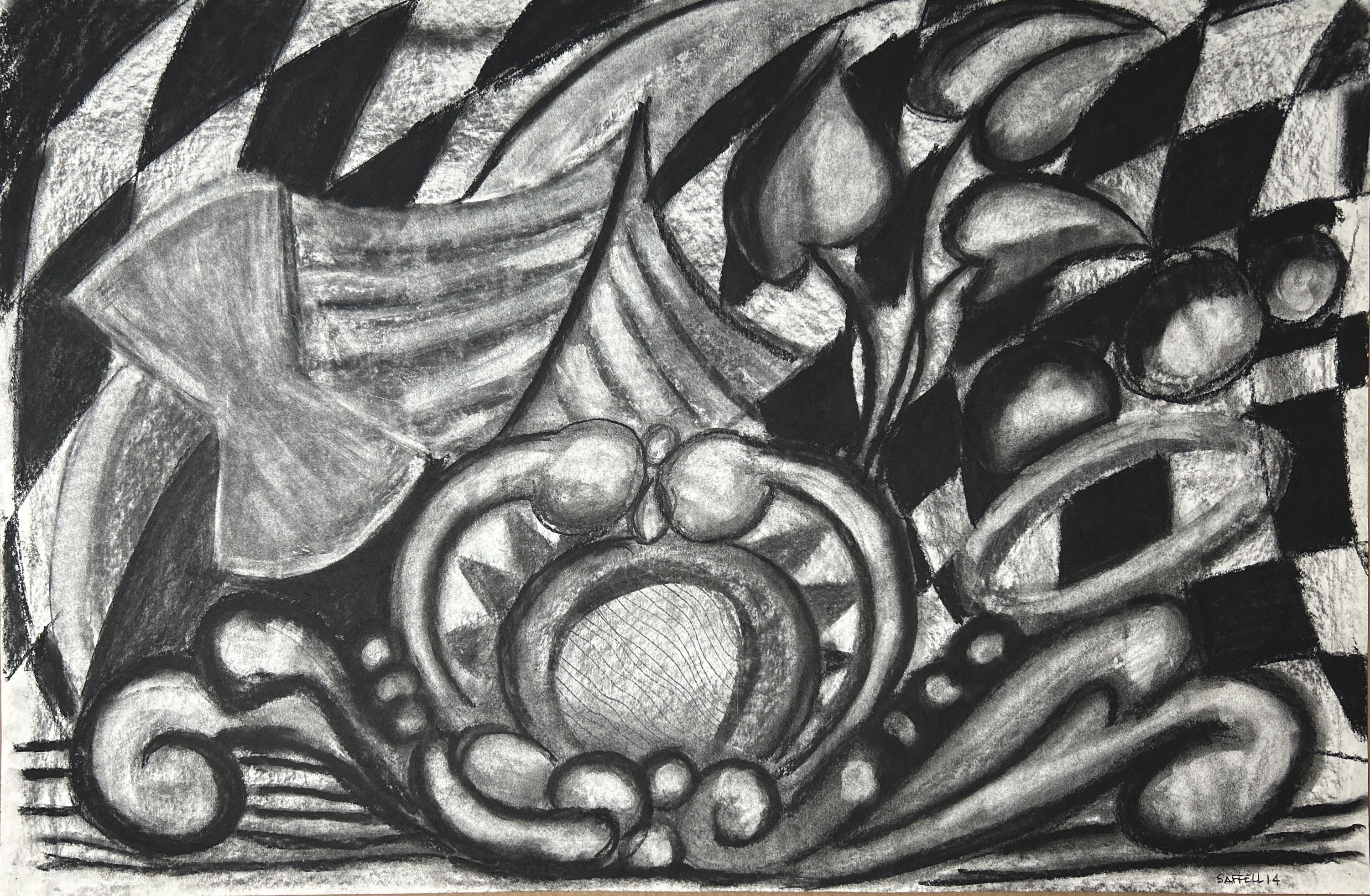
In Black Alchemy, Gardner’s spirals, seeds, sails, checkerboards, and emergent vegetal form into a visual language of regeneration. If the Middle Passage was a site of rupture, these works insist it was also a site of improbable becoming. The repeated swirl patterns suggest tidal force, ancestral return, and the circular logic of transformation, while the appearance of new leaves and budding forms evokes growth after burial. Gardner’s drawings resonate with the Black saying, they buried us, but they did not know we were seeds: our ancestors emerged from unimaginable violence wounded, but not extinguished. These compositions refuse death as the final story. Instead, they visualize Black life as alchemical—capable of turning devastation into culture, memory, ritual, and new worlds. Here, survival is not mere endurance, but the generation of forms, practices, and cosmologies that did not exist before the crossing.
Spiraling forms and layered patterns make regeneration palpable here. Gardner suggests that what was cast into the Atlantic did not simply disappear, but transformed. The sail, checkered pattern, and wind-like rhythms evoke a Black alchemy in which rupture gives way to reconstitution, and survival becomes the ground from which new cultural life emerges.
This composition feels dense with motion, as if culture itself were germinating under pressure. Hence, the deep black areas of the checkered pattern. Spirals, clustered sails, and newly emergent plant-like shapes suggest that Black life in the wake of the Middle Passage was not extinguished, but rerouted into new practices, new meanings, and new collective ways of being.
Gardner gathers sails, seeds, waves, and orbiting forms into a scene of transformation, while Shango’s hammer on the left anchors the work in Yoruba cosmology. As the emblem of the orisha of thunder, fire, and divine force, the hammer signals an alchemy born through rupture, power, and renewal. Gardner thus imagines Blackness not as a static identity, but as a charged process of re-creation. Devastation did not end life; it became the very condition through which new cosmologies, rituals, and cultural forms could emerge.
For acquisition inquiries, please contact info@blackartistsarchive.org.
Where the Waters Made Us closes not with finality, but with return. Across these drawings, Saffell Gardner renders Blackness as a cosmological and cultural process shaped by rupture, survival, and continual remaking. Water, sail, seed, spiral, and symbol become the visual language through which ancestral memory endures and transforms. What emerges is not a narrative of loss alone, but one of alchemy: the making of new worlds from profound violence. Gardner reminds us that Black life in the Atlantic wake was never extinguished. It adapted, generated, and reimagined itself. In that sense, these works leave us with a powerful truth: we were not only carried by the waters—we were made there.
This online resource was developed in collaboration with Saffell Gardner and Sam Trotter.
Where the Waters Made us is organized by the Black Artists Archive and generously supported by the Community Fund of Southeastern Michigan, the James T. Parker Art Trust, and Someday Fine Art Gallery and Bakehouse.